

Build with Us
Refined & Wireless. Neo
2025
Refined & Wireless
~154 PDN MK II units built · 200+ in field · Full wireless mesh
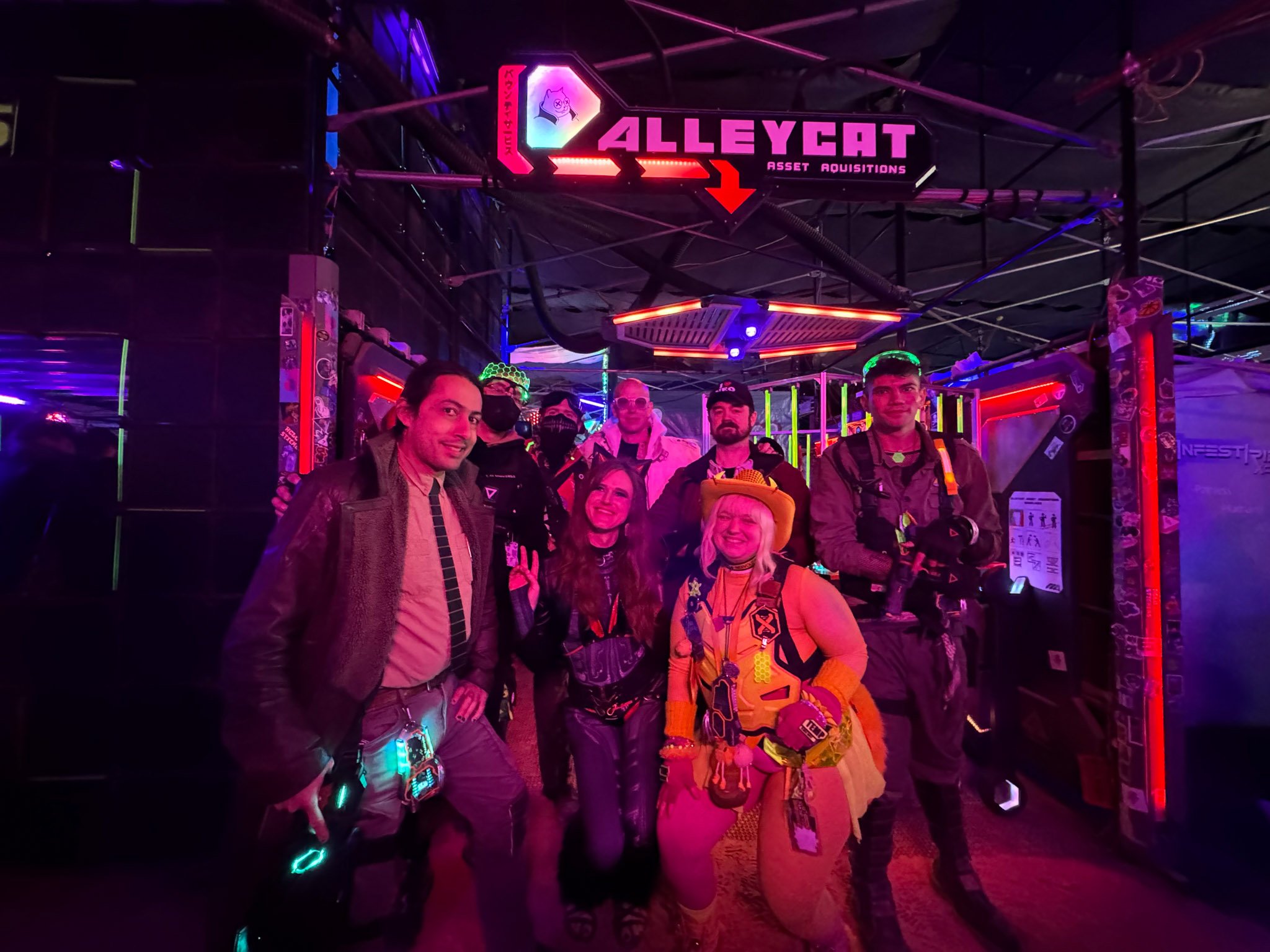
Neo 2024’s crisis lessons applied in full: fewer fasteners, tighter enclosure, and ESP-NOW so scores left the clipboard. Construction dropped from 28 fasteners to 15. This was the first year we logged every Quickdraw match automatically and could hand players a real season recap afterward.
Tech: ESP-NOW wireless, PDN MK II on refined SMD PCB (shared BOM with PDN MK I)
The First Data Season
Starting in 2025, match data uploaded over the wireless mesh without staff retyping results. At season end, every player could get a personalized stats breakdown: Spotify Wrapped, but for a cyberpunk bounty hunting game. That spreadsheet became the foundation for the Leaderboards on this site.
By the Numbers
| Stat | Value |
|---|---|
| Quickdraw matches logged | 3,767 |
| Active players (≥1 match) | 328 |
| PDNs in field | 200+ |
Browse standings and player stats on Neo 2025 season data.
What We Learned
Wireless at scale. Automatic upload changed booth ops. Staff stayed in the field instead of babysitting a spreadsheet. The cost was real engineering: ESP-NOW behavior, packet loss at festival scale, and making sure a dead node did not erase a player’s match history.
Construction iteration. Assembly complexity kills you at volume. Cutting fasteners from 28 to 15 was the difference between a build schedule and a panic. The dovetail rail that closes the cable retainer still pulls double duty closing the case halves.
Retrofit strategy. Not every unit in the field was a fresh PDN MK II build. PDN MK I hardware and retrofitted MK I units still circulated, which mattered when player demand outpaced a single manufacturing run.
PDN Bill of Materials (PDN MK II)
Shared BOM with PDN MK I. Neo 2025 changes were enclosure refinement, wireless firmware, and build volume, not a new parts list.
| Part | Detail |
|---|---|
| MCU | ESP32-S3 N8R8 |
| Battery | 2000 mAh rechargeable |
| Programming | USB-C over JTAG |
| Display | 0.96" 128×64 monochrome OLED |
| Haptics | 10k RPM motor |
| Input | 2× buttons |
| LEDs | 19× WS2812B |
| Serial I/O | 2× serial-over-3.5 mm aux ports |
Software Architecture
The PDN firmware uses a HAL (Hardware Abstraction Layer) so game logic stays off the pin map. A state machine on top sequences multi-stage experiences without nested conditionals. The same core library powers every embedded device in the Alleycat stack.